

Complete Guide to Managing Workplace Strain and Posture
Modern work places repeated physical demands on the body, even when it does not look particularly physical on the surface. Long hours at a desk, screen-heavy routines, limited movement and repeated daily load can all contribute to neck tension, shoulder tightness, back discomfort and a more hunched spinal posture over time.
This guide is here to help you understand how workplace strain builds, why posture changes under load, and what actually helps reduce it.
What workplace posture strain actually is
Workplace posture strain is not usually the result of one perfect or imperfect position. More often, it builds gradually when the body is exposed to the same shapes, loads and movement habits for long periods of time without enough variation.
For many people, the issue is not posture in isolation. It is the combination of sitting for too long, looking down at screens, reduced spinal movement, stiffness through the hips and upper back, fatigue, and a body that is no longer coping well with the way work is loading it day after day.
Common signs your work setup may be affecting your body
Workplace strain does not always show up dramatically at first. More often, it builds gradually and starts to feel normal until the body becomes harder to ignore.
- neck and shoulder tension
- tightness through the upper back
- stiffness after sitting for long periods
- lower back discomfort by the end of the day
- headaches after screen-heavy work
- feeling more rounded or hunched over time
- needing to stretch or crack constantly for relief
- feeling physically flat, heavy or uncomfortable after work
Why desk work changes posture over time
Desk work often pulls the body into the same shape for hours at a time. Screens draw the eyes and head forward. Sitting reduces movement through the spine, hips and ribcage. Upper back extension tends to reduce, chest and shoulder tissues can tighten, and the body gradually becomes more adapted to flexion than extension.
Over time, this can contribute to a more hunched spinal posture, reduced movement options and a body that feels tighter, flatter and less capable than it should. The issue is usually not one moment of sitting badly. It is the accumulation of repeated daily load without enough movement variety to offset it.
Practical ergonomic changes that actually help
Improving posture is usually less about forcing yourself to sit perfectly and more about helping the body tolerate daily load better. That means creating more movement variety, improving mobility where the body is stiff, building strength where the body lacks support, and making your work setup easier to sustain.
The goal is not perfect posture. The goal is a body that feels less strained, less rounded and more capable of coping with the way you work. A few sensible changes to your workstation can make a meaningful difference to your body over time.
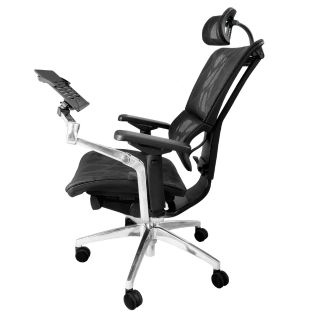
Chair setup
Use a chair that supports the lower back and allows your feet to sit flat on the floor.
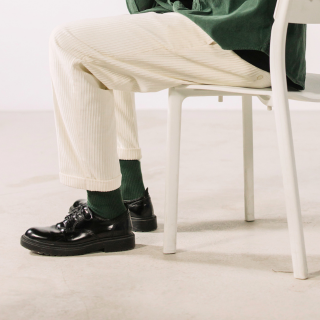
Chair height
Aim for knees around 90 degrees, with thighs roughly parallel to the ground.

Desk height
Set your desk so your elbows stay close to your body and your shoulders do not need to shrug.

Monitor position
Place your monitor at or slightly below eye level and around arm’s length away.

Lighting and screen glare
Reduce glare and eye strain so your body is not constantly leaning or craning to compensate.

Phone and device habits
Raise your phone closer to eye level instead of spending long periods looking down into flexion.
How to sit better
The way you sit through the day does add up. Long periods in the same position, poor desk setup and not moving enough between sitting blocks can all contribute to stiffness, irritation and postural strain over time. This section is here to help you think clearly about how you sit and some simple changes that are worth implementing when you sit for extended periods of time.
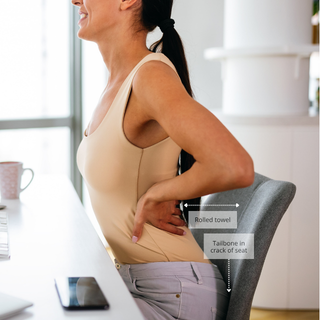
Tuck your tailbone into the seat
- Nestle your tailbone into the crack of the seat. This pelvic alignment counteracts the tendency of the tailbone to tuck under preventing spinal slouching over long periods of sitting.
- Grab a towel, roll it up and secure it with a rubber band on each side.

Place towel in your TL junction
- Find your spine’s thoracolumbar junction (aka TL junction). It’s the part of your spine where your mid back (thoracic) meets your lower back (lumbar), located at about elbow level.
- Lean forward, place the towel at your TL junction, then lean back. Keep in place at all times while sitting.
What to do during the day to reduce strain
Small resets like standing up regularly and taking walking breaks between long sitting blocks repeated through the day usually do more than one perfect stretch done once. If you can implement even three of the helpful movements below into your daily routine, it can make a meaningful difference.
Helpful movements include:
- shoulder rolls
- gentle neck range-of-motion work
- spinal roll-downs
- spinal rotations
- bridges
- chin tucks
The aim is not to turn your workday into a rehab program. It is to stop the body from staying stuck in the same loaded shape for too long.
What helps when the body already feels tight and overloaded
When the body already feels stiff, tense and uncomfortable, it can be difficult to jump straight into exercise or expect ergonomics alone to solve the problem. In those cases, treatment may help reduce pain, restore movement and make the body feel more capable again.
Depending on the presentation, that may include chiropractic, physiotherapy, massage, mobility work or exercise-based care. Treatment is not the whole answer, but it does reduce the barrier between feeling stuck and being able to move forward more confidently.
When it’s worth getting assessed
Sometimes workplace strain settles with better setup, more movement and a few practical changes. Sometimes it does not.
It is worth getting assessed if:
- pain keeps returning
- symptoms are worsening
- you are losing range of motion
- headaches or upper-body tension are becoming frequent
- the problem is affecting sleep, exercise or work
- ergonomic changes alone are not helping enough
- you feel like you constantly need to stretch or crack things just to get by
Sometimes the issue is not just posture-related strain. It may be a more specific neck, shoulder, upper back or lower back problem that needs proper assessment.
Need a clearer next step?
If workplace strain, posture or repeated daily load are starting to affect how your body feels, the next step may be to understand the first appointment process, explore chiropractic, or speak with someone directly.