

Home › Locations › Leichhardt ›
Sciatica in Leichhardt
If you are dealing with sciatica in Leichhardt, this page is here to help you understand the local path to care through Human Movement Co. Whether the issue feels like radiating pain, glute or leg symptoms, sitting aggravation, walking discomfort or flare-ups that seem to travel, our Leichhardt clinic supports people looking for clearer answers and a more practical next step.
Human Movement Co supports people dealing with sciatica through our Leichhardt clinic, with care built around proper assessment, clear explanation and a plan that makes sense for what your body is actually reacting to.
What sciatica may feel like
Sciatica does not always feel like pain sitting neatly in one spot. For some people, it shows up as pain that starts in the lower back or glute and travels down the leg. For others, it feels more like burning, pulling, tingling, tightness or irritation that moves through the hip, thigh or calf and becomes worse with sitting, walking or certain movements.
Sometimes the pattern feels clearly nerve-related. Other times it feels harder to sort out — more like back pain with leg symptoms, recurring flare-ups or a strange discomfort that seems to travel and change. You do not need to have a perfect diagnosis before seeking help. A big part of the process is working out what may actually be driving the irritation and whether the pattern fits sciatica or something else that needs a clearer plan.
Common sciatica patterns
- pain travelling into the glute or leg
- sitting aggravation
- flare-ups that seem to travel
- tightness, tingling or pulling through the leg
When the pattern may feel broader
- walking discomfort or limping
- nerve irritation that comes and goes
- symptoms that feel like back pain plus leg pain
- pain that may feel linked to nearby hip or longer-standing pain patterns
How we assess sciatica at our Leichhardt clinic
At our Leichhardt clinic, assessing sciatica starts with understanding how the pattern actually behaves in your body. That includes looking at your pain history, what tends to aggravate it, whether the symptoms travel, how your body responds to sitting, walking and load, and whether certain daily patterns are making the irritation worse.
We also look at broader functional patterns, including how your lower back, glutes, hips and legs are moving, whether certain areas are compensating, and whether the issue seems more nerve-related, more mechanical or part of a longer pattern that needs a clearer plan. This matters because sciatica can look similar on the surface while being driven by very different things underneath.
That is why proper assessment matters before choosing care. At Human Movement Co Leichhardt, the goal is not to rush straight into treatment without context, but to first build a clearer picture of what may be driving the irritation and what the most appropriate next step actually is. If you want to understand more about how we work, you can explore Our Approach or visit Start Here.
Care options for sciatica at our Leichhardt clinic
Sciatica at our Leichhardt clinic may be supported through chiropractic, physiotherapy or sometimes a combination of both, depending on how the problem presents. The right path is not always about the label — it is about what your body is dealing with and what kind of care makes the most sense from there.
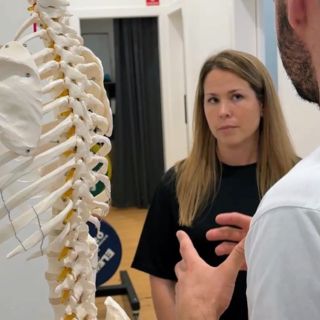
Chiropractic in Leichhardt
Diagnosis-led care for sciatica, radiating pain, recurring flare-ups and nerve-related irritation.
Chiropractic may be a good fit when sciatica feels more linked to restriction, recurring aggravation, spinal tension or mechanical patterns that need clearer assessment and hands-on care.

Physiotherapy in Leichhardt
Rehabilitation-led care for sciatica linked to irritation, weakness, reduced capacity or return to function.
Physiotherapy may be a better fit when sciatica needs a more structured rehab plan, exercise-based support or a clearer path back to walking, work, training or daily activity.
Related conditions we commonly see alongside sciatica
Sciatica does not always appear on its own. At our Leichhardt clinic, it is common to also see related patterns that involve lower back pain, posture-related strain or pain that feels more connected to the hip or to a longer-standing pain pattern. The pages below are a good next step if one of these feels closer to what has been going on.
Lower Back Pain in Leichhardt
Sciatica is often related to, but still distinct from, lower back pain. If the issue feels more centred around the back itself, this page may be useful.
Postural Strain in Leichhardt
If your symptoms feel tied to sitting, desk work, tension or recurring load patterns, postural strain may also be relevant.
Hip Pain
If the issue feels more connected to the hip or surrounding tension, hip pain may be a useful page to explore.
Chronic Pain
If the issue feels more persistent, widespread or longstanding, chronic pain may be a useful page to explore.
Why people choose our Leichhardt clinic for help with sciatica
People choose our Leichhardt clinic for help with sciatica because they want more than a quick opinion or short-term relief. They want a clinic that takes the time to properly assess what may be driving the irritation, explain it clearly and help map out the most appropriate next step from there.
For many people in Leichhardt and the surrounding Inner West, that means care that feels practical, diagnosis-led and grounded in how the body is actually moving and coping day to day. Whether the issue is affecting sitting, walking, work, sleep or general movement, the goal is to make sense of what is going on and build a clearer path forward.
That local clinic context matters. People are not just looking for information about sciatica in general — they are looking for somewhere nearby that feels thoughtful, structured and easy to return to if care is needed over time. If you want to understand more about the clinic itself, you can explore our Leichhardt clinic page. If you’d also like to see what patients have said about their experience, you can read our Google reviews here.
Why Human Movement Co feels different — and where to go next
At Human Movement Co, the goal is not just to give you a quick appointment and send you on your way. Care is diagnosis-led, practical and movement-focused, which means the priority is understanding what may be driving the issue, explaining it clearly and helping map out the most appropriate next step.
For people exploring help with sciatica at our Leichhardt clinic, it is helpful knowing there is a clearer path forward — not just more guesswork. If you want to better understand how we work, what to expect or whether this feels like the right fit for you, the pages below are a helpful next step.
What people say
If you’d like to see what patients have said about their experience with our Leichhardt clinic, you can read our Google reviews here.
Our approach
Learn more about how we assess, explain and build care around diagnosis, movement and long-term progress.
Start here
If you are new to Human Movement Co, Start Here will help you understand what a first visit looks like and how our process works before you book.
Frequently asked questions about sciatica in Leichhardt
If you are dealing with sciatica and are not quite sure what to do next, these are some of the most common questions people ask before reaching out to our Leichhardt clinic.
No — you do not need to work that out on your own before getting in touch. A big part of the process is understanding what may be driving the irritation and which type of care makes the most sense from there. If you are unsure, speaking with a practitioner first is often the best place to start.
Yes — recurring sciatica is one of the more common reasons people reach out. Even if the irritation settles and flares again, it is still worth assessing properly so you can better understand what may be driving the pattern and what kind of plan may help reduce it recurring.
You do not need to wait until the pain becomes severe before getting it checked. Sciatica can also show up as travelling pain, glute tightness, leg irritation, tingling or a sense that the symptoms keep moving and never properly settle.
Yes — our Leichhardt clinic regularly supports people dealing with sciatica, whether it is recent, recurring, movement-related or part of a longer pattern that needs a clearer plan.
The best first step is usually to speak with a practitioner or book an appointment so the issue can be assessed properly. You do not need to arrive with a diagnosis already worked out. The goal is to help make sense of the pattern first, then guide the most appropriate next step.
Ready to take the next step?
If you are dealing with sciatica and feel ready to move forward, the next step is simple. You can speak with a practitioner first if you want help clarifying your situation, or book an appointment if you already feel ready to get started.