
Home › Conditions ›
Scoliosis
Scoliosis is different to ordinary back pain or everyday postural tension. It refers to a sideways curve in the spine that can affect how the body sits, loads, moves and compensates over time. For some people it causes very little pain. For others it can contribute to ongoing muscular fatigue, stiffness, asymmetry, tension or discomfort through the back, shoulders, ribs, neck or lower back. Whether you have known about it for years or are only just starting to make sense of how it may be affecting you, this page is here to help you better understand what may be contributing to it, when it is worth getting checked and what the right next step might look like.
At Human Movement Co., we take a diagnosis-led approach to scoliosis — focused on understanding how the curve is affecting your movement, loading and compensation patterns, not just chasing short-term relief.
What scoliosis can feel like
Scoliosis does not always feel dramatic or obvious. For some people it shows up more as asymmetry — one side working harder, one shoulder sitting higher, or certain muscles always feeling tighter or more fatigued than others. For others it can show up as recurring stiffness, tension through the upper or lower back, discomfort after standing or sitting too long, or a body that feels uneven and harder to keep comfortable over time. It can also affect the way certain movements feel, especially if the curve is creating repeated loading or compensation through the same areas.
Common symptom patterns
Scoliosis may feel like:
- one side of the back or ribs always feeling tighter than the other
- ongoing muscular fatigue through the upper or lower back
- asymmetrical tension through the shoulders, spine or trunk
- stiffness that builds after sitting, standing or walking for too long
- a body that feels uneven, twisted or harder to settle
- recurring ache through the back without one obvious injury
- certain movements feeling more restricted or loaded on one side
Common day-to-day experiences
It often starts to show up in everyday moments like:
- feeling one shoulder or side of the back working harder than the other
- finding long periods of sitting or standing increasingly tiring
- noticing certain gym or daily movements feel uneven
- struggling to stay comfortable through the spine for long periods
- feeling more muscular fatigue than sharp pain
- being aware that posture and symmetry never quite feel balanced
- feeling like your body is compensating around the curve without you fully understanding how
Scoliosis can affect all kinds of people — from teenagers and young adults who have known about it for years, to adults who were only told casually at some point and never really understood what it meant. Sometimes it is not the curve itself that bothers people most, but the way it seems to create asymmetry, fatigue, stiffness and ongoing muscular tension over time. Either way, it is worth understanding properly when it starts affecting how you move, load and feel in your body day to day.
Why scoliosis can become more frustrating over time
Scoliosis often becomes frustrating not just because of the curve itself, but because of what the body has to do around it. For some people that means one side of the body consistently taking more load, certain muscles working harder, and particular joints becoming stiffer or more irritated over time. For others it shows up more as recurring fatigue, postural tension, uneven movement or a body that feels harder to keep comfortable the longer the day goes on.
In many cases, the issue is not being driven by one single painful spot. It can reflect a combination of factors — how the spine is curving, how well the body is controlling that asymmetry, how much strength and endurance you have through the trunk and supporting muscles, how well you recover from daily load, and whether certain regions are repeatedly compensating for the way the curve changes movement and posture. That is part of the reason scoliosis can overlap so often with postural strain, lower back pain, neck pain and shoulder pain. If that sounds familiar, those pages may also be relevant.
This is also why chasing the symptoms alone often falls short. If the only goal is to release the sore side without understanding how the curve is influencing the whole system, the pattern usually stays the same. The body might feel better for a while, but the underlying asymmetry, reduced endurance, compensation patterns or movement restrictions remain unchanged. Over time, that can start to look like a body that keeps tightening in the same places, an increasing sense of imbalance, or recurring discomfort that never fully settles for long.
At Human Movement Co., our approach is to look beyond the sore spots and make sense of the bigger picture. We want to understand how the curve is affecting movement, loading and resilience, why certain areas are compensating more than others and what needs to change to create more durable progress. You can read more about this on our Our Approach page.
How we assess scoliosis
Scoliosis is not one uniform problem, which is why guessing is rarely enough. Two people can both have a curve in the spine but have very different symptoms, movement patterns and support needs — and the right next step depends on understanding how the curve is actually affecting the body in your case.
When assessing scoliosis, we look at more than just where it hurts. We look at how your posture and spinal shape are presenting, how your body is loading and moving around the curve, what areas are working harder than they should, what feels restricted, how long the issue has been affecting you, and how it is influencing your comfort, function and confidence day to day. We also look at how the shoulders, ribs, trunk, pelvis and surrounding muscles are compensating, because scoliosis often affects the whole system rather than one isolated area.
Just as importantly, we want to understand the context around the issue. That might include work demands, training history, previous advice you have been given, physical habits, muscle endurance, recovery patterns, or whether certain regions have become more reactive over time. The goal is not just to identify a curved spine, but to understand the broader pattern behind the discomfort, asymmetry and compensation.
That is what allows care to be more specific. Before deciding what kind of treatment is most appropriate, we are trying to understand how the curve is affecting your movement, what your body is currently tolerating, and what needs to improve for progress to hold. You can read more about this and our diagnosis first treatment philosophy on our Our Approach page.
Assess
We assess how the curve is affecting your posture, movement, loading and compensation patterns over time.
Explain
We explain what we think is going on in clear language, including how the scoliosis may be influencing your symptoms, what needs to change and where hands-on treatment will help.
Plan
We build a treatment plan around the findings, which may include adjustments, functional screening and exercise prescription depending on what your body needs.
How we’ll help
Helping scoliosis usually involves more than just trying to settle the sore side. In many cases, progress comes from combining the right type of treatment with a clearer understanding of how the curve is affecting the body, how much asymmetrical load it is currently tolerating, and what needs to improve over time.
That may involve easing stiffness, improving movement, reducing overload through the areas that are compensating most, and helping the body feel less uneven and less fatigued through the day. It may also involve rebuilding strength, improving control and endurance, and gradually increasing your body’s ability to cope with asymmetry without tightening up so quickly.
Depending on what is going on, care may include adjustments, exercise prescription and functional screening. In many cases, exercise prescription is especially important because long-term progress often depends on improving control, strength, endurance and how well the body manages the asymmetry created by the curve.
The right approach depends on the presentation. Some people need help settling a more irritated or fatigued body before they can build back up. Others need a more progressive plan because the compensation patterns are recurring, endurance has dropped away, or the body has started reacting to the curve in the same unhelpful way day after day. That is part of the reason scoliosis can sometimes overlap with issues like postural strain, lower back pain, neck pain or shoulder pain, depending on what is driving the pattern.
The goal is not just to get through the next few days with less discomfort, but to help your body feel more balanced, more capable and more reliable again — with a clearer path forward, better movement and progress that holds up beyond the treatment room.
Which service is the right fit?
The right practitioner often depends on what is going on, how your body is functioning, and what kind of care you need most right now. Some people with scoliosis need more hands-on, movement-restoring treatment. Others need a more rehabilitation-led approach focused on rebuilding strength, endurance, control and tolerance to asymmetrical load over time. If you are not sure which service is the better fit, that is completely okay. At Human Movement Co., the first appointment follows the same diagnosis-led structure whether you see a chiropractor or a physiotherapist. In both cases, the goal is to understand what is driving the issue, assess how your body is functioning, and build the most appropriate treatment plan from there.
Chiropractic
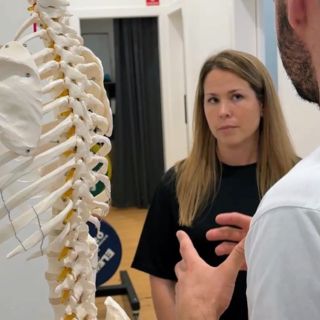
Chiropractic may be a good fit if your scoliosis feels more linked to stiffness, restriction, recurring spinal tension, joint irritation or the way your body is moving overall. It can be especially useful when you want a hands-on assessment, a clearer understanding of what may be driving the issue, and care aimed at improving movement and function.
Physiotherapy
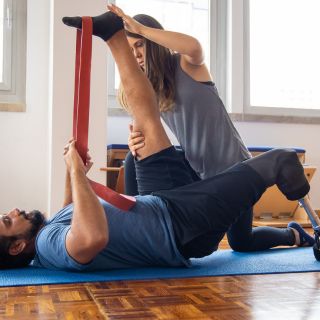
Physiotherapy may be a good fit if your scoliosis needs a more rehabilitation-led plan, especially where strength, endurance, movement control or tolerance to asymmetrical loading are part of the picture. It can be especially useful when you want structured exercise-based support and a clearer pathway back to feeling stronger, more balanced and more capable in your body.
Related conditions
Scoliosis does not always sit in isolation. Depending on what is driving it, some of the pages below may also be relevant — especially if asymmetry, compensation or postural fatigue are feeding into the broader pattern.
Postural Strain
If your scoliosis is showing up more through asymmetrical tension, muscular fatigue or ongoing postural discomfort, this page may also be relevant.
Lower Back Pain
If your curve seems to be contributing more to lumbar stiffness, irritation or recurring discomfort through the lower back, this page may also be relevant.
Neck Pain
If your upper spine and shoulder girdle are compensating and creating more stiffness or tension through the neck, this page may also be relevant.
Shoulder Pain
If scoliosis is creating asymmetry and recurring tension through the upper back and shoulders, this page may help you better understand the broader pattern.
Related modalities
If you are trying to understand what treatment might actually involve, these modality pages are a helpful next step. They explain some of the tools we may use as part of a broader plan for scoliosis, depending on what your assessment shows.
Adjustments
Adjustments may be an appropriate part of care when restoring movement through the spine and nearby joints is likely to help reduce stiffness and improve how the body is functioning around the curve.
Exercise Prescription
Exercise prescription is often one of the most important parts of long-term scoliosis care because it helps build strength, control, endurance and better management of asymmetrical loading over time.
Functional Screening
Functional screening helps clarify how the curve is affecting movement, loading and compensation patterns across the whole body.
Want to understand how we work first?
If you are not quite ready to choose a service, that is completely okay. These pages are a good next step if you want to understand how we think about care, what to expect and the most appropriate place to begin.
Our approach
Learn more about how we assess, explain and build treatment plans around diagnosis, movement and long-term progress.
Who we help
Explore the types of people we commonly work with, and the kinds of problems, goals and frustrations that often bring them to the clinic.
Start here
If you are new to Human Movement Co., Start Here will help you understand what to expect and how our process works before you commit to booking.
Frequently Asked Questions (FAQS) about scoliosis
If you’re still trying to work out what scoliosis means in your case, these are some of the most common questions people ask before taking the next step.
Scoliosis can keep causing tension or discomfort when the body is repeatedly compensating around the curve in the same way over time. That might include asymmetrical loading, reduced strength or endurance, movement habits, recovery, work demands or recurring muscular fatigue through the same areas. For some people, the issue is less about the curve alone and more about how the body is coping with it day after day. That is why scoliosis often needs more than temporary relief — it needs a clearer understanding of how the curve is affecting the whole system and what needs to change for progress to hold.
Yes. Scoliosis does not need to cause severe pain to be worth looking into. For many people, it shows up more as recurring tension, muscular fatigue, stiffness, asymmetry or a body that feels uneven and harder to keep comfortable than it should. Those patterns still matter, especially if they keep interfering with comfort, movement or confidence. In many cases, getting the issue assessed earlier can help you understand what is contributing to it before it becomes more disruptive.
A good rule of thumb is that it is worth getting checked if it keeps affecting how you move or function, has started creating more stiffness, asymmetry or fatigue, or is making you change what you do day to day. It is also worth getting assessed if you are losing confidence in sitting, standing, working, training or feeling comfortable in your body. You do not need to wait for it to become extreme before doing something about it — ongoing or recurring tension and imbalance are usually reason enough to understand it properly.
No. Scoliosis is rarely approached through just one method. The right approach depends on how the curve is affecting your body, how you are functioning, and what kind of support you need most right now. Depending on the presentation, care may include hands-on treatment like chiropractic adjustments, exercise-based support, movement guidance and more structured rehabilitation. The goal is to choose the approach that best fits the problem, not force every case into the same treatment style.
It is worth getting scoliosis assessed when it keeps lingering as a source of tension, fatigue or discomfort, or starts limiting what you can do comfortably. Some people come in because certain regions keep tightening and never fully settle. Others come in because the body has quietly become more stiff, uneven or harder to manage over time. Either way, if it is affecting your daily life, training, work, sleep or peace of mind, it is reasonable to get clarity on what may be going on and what the right next step looks like.
Ready to take the next step?
If you’re still not sure whether now is the right time to book, that’s completely okay. You can speak with a practitioner to talk through your specific situation or concerns, or visit our Start Here page if you’d prefer to get a better sense of how everything works before taking the next step.